
.png)



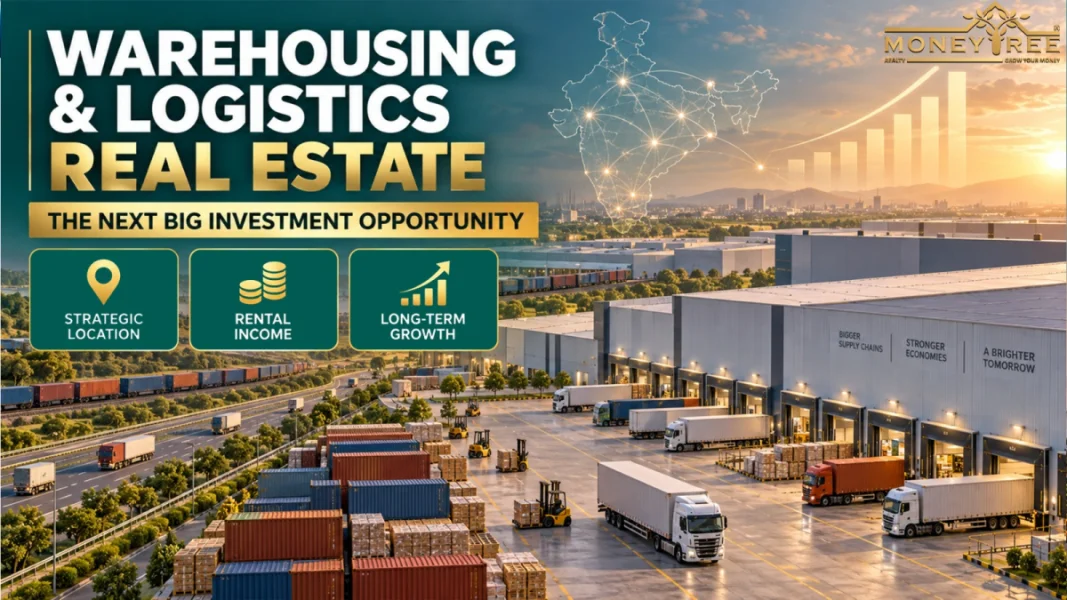
Table of Contents
Asking the majority of people about their understanding of commercial real estate would yield just two options: office floors located within glass towers and a shop on a high street. This is the classic image.
Then comes a client sitting opposite, with a substantial part of their property portfolio consisting of residences, and asking about the alternatives. Bringing up a warehouse located off a highway beyond Manesar, leased by a regional logistics company, will make them shiver a little, like something low-class.
During the last couple of years, things have changed drastically. While discussions focused on the problem of office vacancy and high-street retail issues, warehousing & logistics real estate suddenly became one of the hottest sectors in India. Foreign investment funds have created entire Indian platforms focusing on the warehousing segment; developers are buying land lots near freight corridors; and major real estate deals nowadays happen with logistics parks instead of skyscrapers.
This guidebook discusses the factors, top locations, criteria for choosing the right investment as well as the risk profiles related to warehouse real estate in India.
What Is Warehousing & Logistics Real Estate?
At its core, logistics real estate is composed of properties in which merchandise is held and transported in the supply chain.
All those late-night orders that are delivered the following day owe their existence to real estate planning that was done several years prior based on the size of the plot of land, proximity to highways, and layout of the warehouse.
Logistics Property Types
Grade-A vs. Grade-B Warehouses
| Grade-A Warehouses | Grade-B Warehouses |
| Clear height allowing vertical racking (>9–12 meters) | Lower clear heights and weaker floors |
| Super-flat floors with high load capacity | Converted godowns with informal construction |
| Dock levellers and automated fire suppression (FM Global) | Patchy regulatory compliance and limited truck turning radius |
| High institutional occupier demand (3PL, e-commerce) | Local occupiers, shorter leases, and lower rental yields |
Institutional occupiers typically prefer Grade-A properties due to their stronger compliance, operational efficiency, and safety standards.
What Is Driving India's Warehousing Real Estate Growth?
India’s warehousing industry is booming due to the requirement for bigger and better infrastructure to store goods. There are several reasons behind this trend:
India's Top Warehousing & Logistics Real Estate Markets
| Market | Principal Clusters & Corridors | Demand Anchors |
| Delhi–NCR | Gurugram–Manesar (NH-48), Sohna, Farukhnagar, Dadri | Massive consumption base, dense expressway grid, DFC access |
| Mumbai (MMR) | Bhiwandi, Panvel, Taloja, JNPT corridor | Port-led trade, dense urban catchment, high land constraints |
| Chennai | Oragadam, Sriperumbudur, Red Hills | Auto and electronics manufacturing, proximity to ports |
| Pune | Chakan, Talegaon, Ranjangaon | Heavy manufacturing, automotive, overflow from Mumbai |
| Bengaluru | Nelamangala, Hoskote, Dabaspet | E-commerce hubs, tech retail distribution |
| Hyderabad | Medchal, Shamshabad, Bhongir | Pharma hubs, streamlined land allocation process |
| Tier-2 / Tier-3 Hubs | Lucknow, Jaipur, Coimbatore, Nagpur, Indore | Regional distribution, lower entry costs, expanding expressways |
Why Investors Are Turning Towards Warehousing Real Estate
Investors are going for warehousing real estate because of the very high returns from their investment, their rapid growth because of online businesses, and less investment as compared to other commercial properties. The following are some of the features of the warehousing property:
High Rental Income: Industrial property generates higher rents when compared to residential property due to lower building costs in relation to the land area.
Long-Term Leases: Tenants enter into long-term lease arrangements with embedded escalations and lock-in periods.
Tenant Relocation: Tenants incur high costs through the incorporation of high-end fit-out, including automated racking, specific floor finishes, and IT infrastructure.
Investor Liquidity: International private equity firms invest aggressively in Grade-A logistics properties, thus providing obvious exit strategies.
Warehousing vs. Traditional Commercial Real Estate
| Feature | Warehousing | Office Properties | Retail Space |
| Primary Driver | Goods movement, consumption, manufacturing | Corporate headcount & flexible work policies | Footfall, consumer discretionary spend |
| Tenant Profile | Single 3PL/Corporate tenant per box | Multiple corporate occupiers per floor | Multiple retail brands |
| Fit-Out Cost (Landlord) | Moderate to High | High per sq. ft. | High per sq. ft. |
| Re-leasing Risk | High binary risk (100% vacancy when empty) | Gradual floor-by-floor absorption | Moderate dependency on mall management |
Evaluating a Warehousing Investment
Factors to be considered in evaluating logistics property investments:
Key Risk Factors of Investments
Conclusion
The rapidly growing Indian warehousing & logistics real estate sector is an outcome of structural changes in consumption trends, infrastructure growth, ecommerce, production and logistics chains. The investment potential of Indian warehousing real estate lies in the long term for investors who analyse each property with respect to its location, access, specifications, tenure and commercial viability.
For effective commercial real estate investment in the warehouse industry, due diligence must be done effectively in aspects such as site accessibility, roads and highway connections, distance from consumption and production centres, among other factors. This ensures that the investor can recognise high-quality warehouse investment property with good fundamentals and high rental capabilities.
MoneyTree Realty is an organisation that offers its investors an easy way to evaluate investment opportunities in various industrial areas in India, such as Gurugram, Ghaziabad, Lucknow, Mumbai, Pune, and Bengaluru. We assist our clients in making wise decisions in India’s emerging market of logistics and warehousing.
Whether you are exploring warehousing investment, logistics real estate, industrial property, commercial real estate, or strategic site selection, partnering with an experienced real estate advisor can help you navigate the complexities of the market and identify opportunities aligned with your investment objectives.
Connect with India's Most Trusted real estate advisor for expert advisory on commercial warehousing, real estate portfolios, lease structures, and strategic site selection. Call us: +91-9732300007
Disclaimer: This article is for informational purposes only and does not constitute investment, legal, tax, or financial advice. All prices, sizes, areas, dimensions, rentals, yields, and configurations mentioned are indicative only and subject to change at the developer's or owner's discretion — they may vary from the final agreed figures. Any vastu-related references are based on traditional beliefs and general principles, are shared for informational purposes alone, and should not be treated as professional or religious counsel. Market conditions, rental yields and infrastructure timelines change frequently and vary by micro-market. Readers are advised to independently verify all project details, land use permissions, approvals, RERA registration, title documents and lease terms, and to consult a qualified advisor before making any investment decision. MoneyTree Realty accepts no liability for decisions taken based on this content.
Frequently Asked Questions
-card.webp)