






Table of Contents
The main difference between freehold and leasehold properties is the way you hold the property and the land that belongs to it.
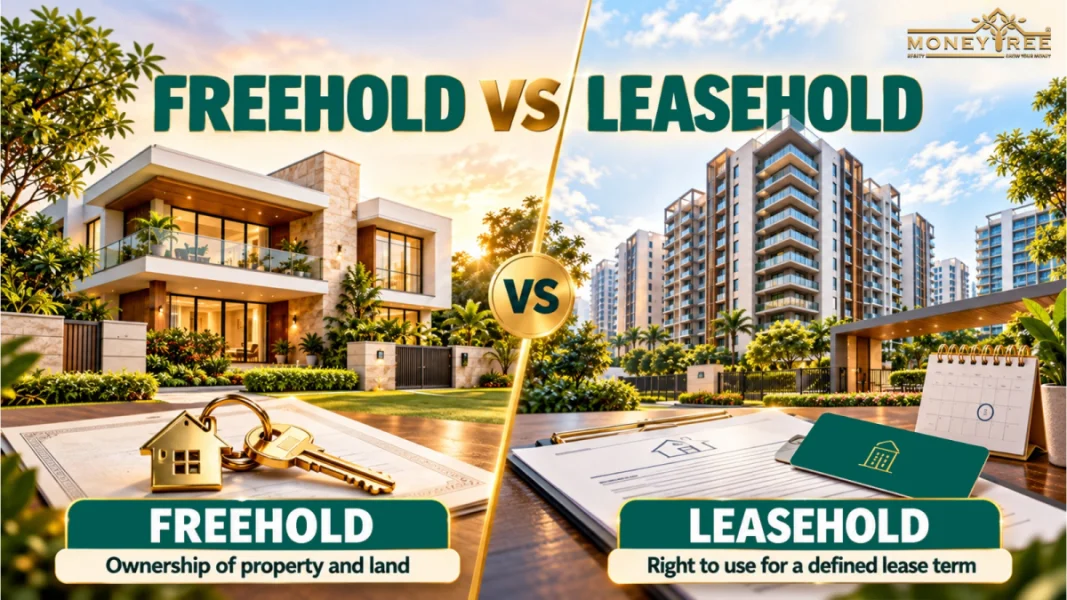
In simple words, freehold property will basically give you ownership of both the building and the land it is built upon, subject to any existing laws and regulations. On the other hand, in the case of leasehold property, you will only be allowed to use the property for a certain period of time through the lease, but not the land itself.
Knowing the difference between the two will be crucial before you purchase any property because of its impact on how you can make use of the property, among other things. In this article, we explain what freehold vs leasehold properties are, along with their differences and pros and cons.
Freehold vs Leasehold Property: Key Differences
The key distinction between freehold and leasehold ownership lies in ownership of the land and tenure of the property.
| Factor | Freehold Property | Leasehold Property |
| Ownership | Complete ownership of land and building | Ownership of the right to use the property for a specified period |
| Land rights | Belongs entirely to the property buyer | Remains with the government authority or private lessor |
| Ownership period | Unlimited / Permanent | Fixed duration (commonly 30, 60, or 99 years) |
| Control over property | Complete freedom to renovate, alter, or redevelop (subject to local building codes) | Restricted; modifications often require approval from the landlord or authority |
| Resale | Smooth and hassle-free resale process | Restricted; modifications often require approval from the landlord or authority |
| Transfer process | Simple conveyancing deed or sale deed registration | Requires transfer permission, NOC, or payment of transfer fees |
| Financing | Easily approved for home loans by banks and financial institutions | Home loan approval depends on the remaining length of the lease |
| Maintenance/ground rent | No ground rent; owner pays standard municipal taxes and maintenance | Ground rent or lease charges apply along with annual maintenance |
| Conversion | Not applicable (already freehold) | Possible in many regions by paying conversion charges to local authorities |
| Inheritance | Effortlessly passed down through legal heirs or a valid will | Passed down for the remain |
What Is Freehold Property?
It is quite easy to get the definition of freehold property because it offers full and complete ownership. In freehold property ownership, you will have full rights to the building and the piece of land on which it stands.
There is no time limit in your ownership because you can buy, improve, rent out, or pass it on to your lawful heirs without having to seek anyone's permission.
What is Leasehold Property ?
Understanding the leasehold property definition becomes easier when you take into consideration that he is buying or renting a property for an extremely long time period. When it comes to the leasehold property, then the land is owned by others like the government, local authority, or some private developers. One will be granted the right to use the property for the specified period, which is mostly 99 years.
One can make use of the house, apartment, office or any other property according to the terms specified in the lease agreement. But after the expiry of the lease period, the ownership of the property might revert to the original landowner unless one extends his lease. In other words, leasehold property implies that the ownership of the property for a specified period of time is available to the owner, but the land will not be owned by him forever.
Freehold Property: Advantages and Disadvantages
Freehold property is an asset that includes ownership not just of the structure but also the land where the structure stands. It has no pre-established lease term, which gives the owner more flexibility.
Pros of Freehold Property
Cons of Freehold Property
Leasehold Property: Advantages and Disadvantages
Leasehold property might be a good choice for buyers who need to possess a certain piece of property for a long time but do not necessarily need to purchase the land forever. Nevertheless, it is crucial to consider both advantages and drawbacks prior to purchasing it.
Pros of Leasehold Property
Cons of Leasehold Property
Can a Leasehold Property Be Converted Into Freehold?
Yes, in some instances, it is possible to convert leasehold property into freehold property. This process depends on the place and the landowner, who may be an authority in that particular place.
What is leasehold-to-freehold conversion?
A conversion from leasehold to freehold is a process that allows a tenant to convert their leasehold to absolute freehold through payment of a conversion fee to the land department.
Who can apply for conversion?
In most cases, one who holds the registration for the lease, a power of attorney holder, or the legal heirs can request conversion when all arrears and ground rents are paid.
Documents generally required
Conversion charges and other costs
Conversion fees differ greatly depending on the location of the land, its area, government rates, and whether the lease is current. Other expenses include stamp duty, registration fees, and legal fees.
Important Note: The process of leasehold to freehold conversion and the fee structure differs from state to state in India. For example, the DDA follows its own set of rules regarding the conversion policy and its land rate, while West Bengal, Maharashtra, and others follow their own set of rules.
Freehold vs Leasehold: Which Is Better for Buyers?
In determining the suitability of freehold vs leasehold Property, one size cannot fit all purchasers. There is no perfect alternative; the best will depend on your financial capacity, future intentions, location, and intended use of the property.
Here are some important factors to consider:
What Should You Check Before Buying a Leasehold Property?
In case you purchase a leasehold property, it is necessary to put in more effort because you will not be buying the land but only the right to use the property for a certain period of time. The following should be taken into consideration:
Conclusion: Freehold vs Leasehold Property — Which One Should You Choose?
The decision to go for freehold vs leasehold property depends on various aspects such as budget, preference for property ownership, investment needs, and future considerations. The freehold is usually one that entails owning not only the building but the land as well. Leasehold, on the other hand, refers to owning a property that can be used and occupied for a specific period of time as per the terms of the agreement. Various factors need to be considered when making such decisions.
Before the purchase, analyse the following aspects: title documents, lease deed, lease tenure left, fees involved, approvals, etc. Analysis of these aspects may assist you in selecting the property which is in line with your financial goals.
When you need help navigating real estate markets, finding good investment prospects, or assistance with real estate paperwork, Moneytree Realty, India's most trusted real estate advisor, is the one to approach for your real estate needs. Call us now at +91-9732300007.
Frequently Asked Questions