






Table of Contents
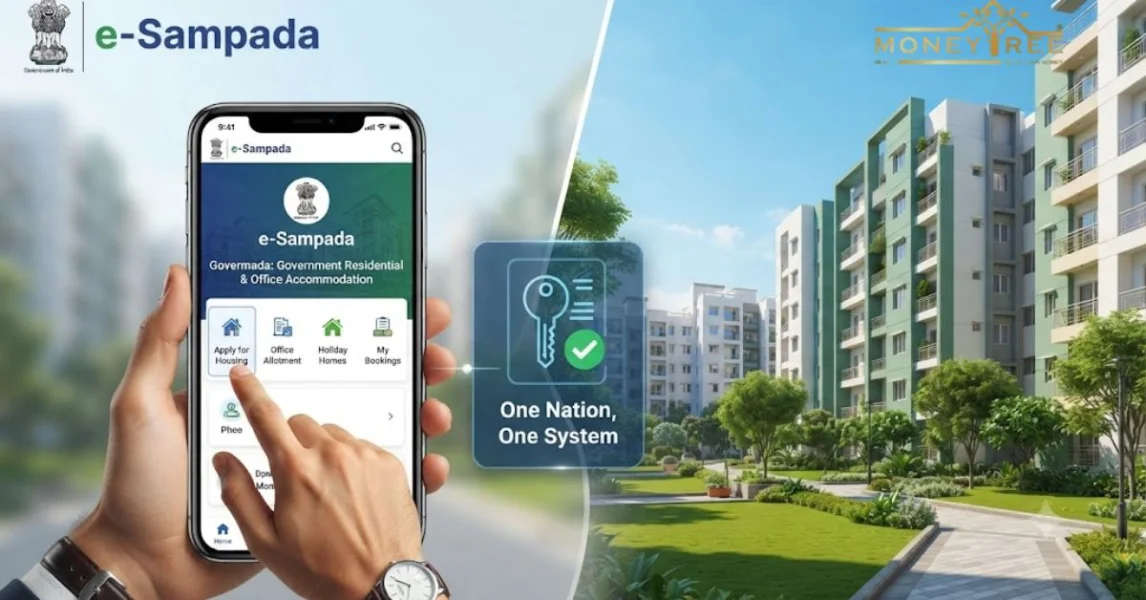
e-Sampada is a single digital platform run by the Ministry of Housing and Urban Affairs (MoHUA), Government of India, to manage different kinds of government accommodation and other related services. Previously, there was a need to visit different portals for different services, like e-Awas portal for government residential accommodations and Holiday Homes for government guesthouses. e-Sampada provides all these services through a single platform.
Prior to e-Sampada, one would require visiting multiple websites to obtain accommodation from the government, arranging for holiday homes or other similar facilities. The Government of India launched e-Sampada to consolidate all such facilities under one digital process.
This comprehensive guide covers all aspects of e-Sampada, covering e-Sampada registration, e-Sampada eligibility criteria, e-Sampada login, services offered, accommodation by the government, and persons eligible for e-Sampada registration.
What Is e-Sampada?
e-Sampada is an online platform and app developed by the Directorate of Estates (DoE) under the MoHUA. It was released on 25th December 2020 (Good Governance Day), bringing together four online portals that existed before (gpra.nic.in, eawas.nic.in, estates.gov.in, and holidayhomes.nic.in) and two mobile apps into one place.
With the vision of One Nation, One System, the e-Sampada portal acts as an online gateway for dealing with all government estate services within the country. These include the allocation of government residential accommodation, commercial accommodation, offices, venues, and guesthouses.
What Services Are Available on e-Sampada?
e-Sampada is an electronic portal providing online facility for allocation of government accommodation along with other related services to eligible government employees.
Who Can Register on e-Sampada?
The primary purpose of registration in the e-Sampada portal is for government employees and officers eligible for government housing based on their department, post and other government guidelines.
Central Government Employees: Eligibility for government accommodation applies to permanent or regular workers employed within Central Government Ministries, Departments, and attached offices.
Eligible Delhi Government Employees: Employees of the Government of NCT of Delhi are eligible to register if their respective positions come under the approved accommodation pools.
GPRA-Eligible Employees: Persons who work in autonomous organizations, statutory organizations, and any other organization that may have been identified as eligible for GPRA by the competent authority may also apply.
Other Eligible Officials: For example, some classes, including judges of the Supreme Court and High Courts, Members of Parliament (MPs) and State Government officers deputed to central government departments, may qualify under certain government criteria.
Can Private Individuals Register?
No, not in general. The common people who are not government officials cannot become eligible for residential accommodation through GPRA. But there could be certain services within the e-Sampada that could be availed by the common public, such as certain commercial tenders or market place venues.
Who Is Eligible for Government Accommodation Under e-Sampada?
For GPRA housing via e-Sampada, an individual needs to fulfil certain basic criteria laid down by the government:
What Is GPRA Under e-Sampada?
General Pool Residential Accommodation: A centralized residential accommodation facility that is offered to eligible employees of the Central Government, along with some other entitled government officials. GPRA is regulated by the Directorate of Estates (DoE), Ministry of Housing and Urban Affairs, Government of India. The accommodation facilities are allotted based on the rules defined by the Government.
The e-Sampada portal has facilitated the digitisation of the whole process of GPRA allotments. It has made it possible for those who qualify to make their applications and manage their allotments through the internet. The portal caters to different phases of the process such as online application, registration, waiting list management, allotment of accommodations, acceptance of the allotment, retention and vacation.
GPRA accommodation can be classified into various categories and types such as Type-I residential accommodation up to higher type government accommodations, flats, houses, and bungalows. The classification of the type of accommodation normally depends upon the pay scale, entitlements, and eligibility of the concerned employee. Some higher category accommodations can be reserved for certain government officials including ministers, judges, and dignitaries.
The e-Sampada GPRA portal allows the applicant to get critical information regarding his or her application for and allotment of residential accommodation. It ensures reduced paperwork and enhanced transparency in the allotment process of government residential accommodation.
How to Register on the e-Sampada Portal?
Step one for an eligible Central Government employee wishing to access services in relation to GPRA accommodation, government residential accommodation, online allotment and other estate management services is registration on the e-Sampada portable. This is a simple process that requires basic information for verification.
Once the profile is validated, eligible users may avail themselves of the relevant e-Sampada services online, such as GPRA application, accommodation allotment, waiting list details, allotment status, and other allotment related services.
What Documents and Details Are Required for e-Sampada Registration?
Before getting e-Sampada registration , one must have all the necessary details regarding their personal, professional, and identification information handy. The correct information is needed for verifying employees, GPRA eligibility, allocation of government accommodation, and the nodal officer/DDO’s approval. In case of other services too, some more documentation may be required.
Required Information and Documents
Information about Employees: Full Name, Gender, Date of Birth and Present Official Residential Address.
Government Services Information: Information like Office Name, Ministry/Department, Designation, Pay Grade and Posting Location.
PAN and Identity Details: PAN number valid, Aadhaar details, or a government-issued identity card if applicable. The copy of the concerned identity proof may be required at times.
Mobile Number and Email ID: A valid phone number and a government/NIC email ID are mostly mandatory for OTP authentication, registration, and notification by the e-Sampada application.
Employee Code: A valid Employee ID/Employee Code/PPO No., whichever is appropriate, for identifying the government employee in the official record books.
Appointment and Joining Details: Employment data pertinent to the case: Appointment/Joining letter; Date of joining in government service; Date of expected retirement.
Having these things organised beforehand would be beneficial for easy completion of the e-Sampada registration procedure, and there would not be any hassles in the process of profile verification, GPRA application, and e-Sampada online services.
How Does e-Sampada House Allotment Work?
The e-Sampada house allotment process is an automated method through which allotment of GPRA (General Pool Residential Accommodation) houses is done for eligible Central Government employees. The entire process, starting from the registration of the employees until they take possession of the house, is automated.
Registration & Profile Verification: The concerned employee registers on e-Sampada, and his/her profile details are verified by the departmental DDO.
Eligibility & Waiting List: A waiting list is generated by the system based on salary and priority date of the employee.
Online Bidding: Employee expresses interest in the vacant quarters during the active month’s bidding process.
House Allotment: The process is automated for assigning a house depending upon the sequence of priority and preferences of the individual.
Accepting House Allotment: The allotted house needs to be accepted online during the mentioned time frame.
Possession of the Allotted House: Download the allotment letter online and get in touch with the respective CPWD office to get the keys.
Penalty: An individual who fails to accept the allotted house in due time will be prohibited from participating in the bidding for a definite time period (usually one year).
How Is e-Sampada Eligibility Decided?
Eligibility for e-Sampada depends primarily on the employment status, entitlement type, and government housing regulations that apply to the applicant. The process ensures that the conditions set out are met before allocating the property.
| Factor | Description / Impact on Allotment |
| Pay Level | Determines the housing type (Type I to Type VIII/Bungalow) an employee qualifies for. |
| Date Of Joining | Establishes overall seniority within a particular pay scale or pool. |
| Date of Promotion | Determines priority when upgrading eligibility to a higher quarter category. |
| Eligible Pool | Identifies whether the applicant falls under general, tenure, or judicial categories. |
| Office Eligibility | Verifies if the applicant's workplace is CCA-approved for GPRA allocation. |
| Accommodation Eligibility | Governs allotment speed based on vacant inventory at the selected station. |
Can Retired Government Employees Use e-Sampada?
Yes, if you are a retired Central Government employee, you can use the e-Sampada Portal for specific retirement services. Your access and eligibility depend on the applicable e-Sampada rules for retired government employees.
Common Problems During e-Sampada Registration
Several problems can occur during e-Sampada registration, including OTP verification, profile validation, employee information, or waiting list information. Most problems can be resolved by coordinating with the concerned DDO or Nodal Officer using registered information.
Conclusion: Who Can Register Under e-Sampada?
The use of e-Sampada portal has made the management of government accommodation and associated estate services much easier. In order to get access to the services available on the e-Sampada portal, it is important for individuals to know about e-Sampada, register themselves on the portal properly, and see whether they qualify for the e-Sampada eligibility criteria.
It would be helpful to know the eligibility criteria and ensure that the information related to the employees, services, and contacts is updated. Before applying for any services, it is important to ensure that the user knows the most recent eligibility criteria and requirements related to their group.
For help with residential and commercial real estate in India, Moneytree Realty, India’s most trusted real estate advisory, assists purchasers and investors in finding properties that meet their needs and objectives. Contact us now on +91-9732300007.
Frequently Asked Questions