




Table of Contents
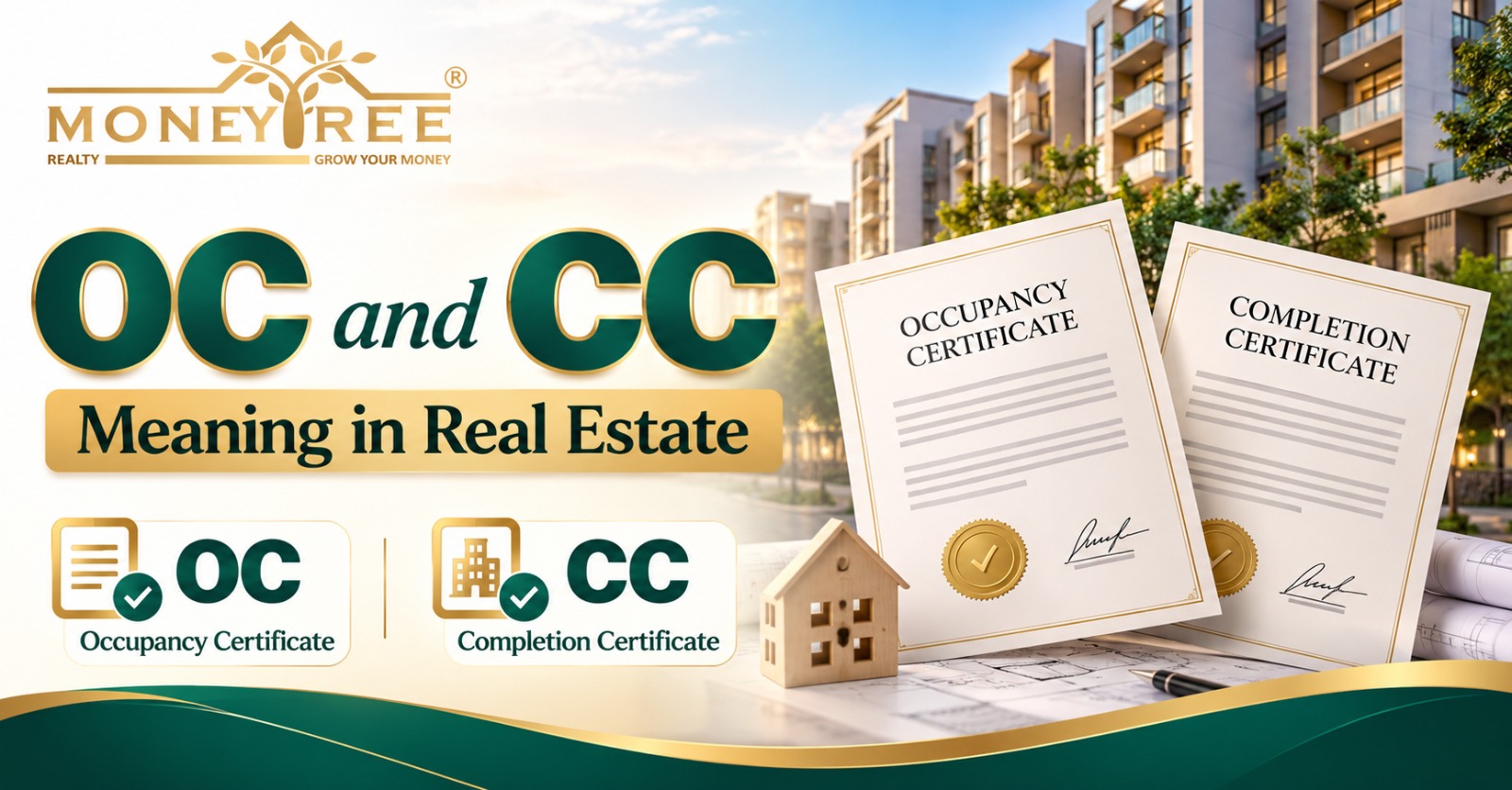
Purchasing a new house from the Indian real estate industry is a major decision taken both emotionally and financially in your life. They tend to focus on the space in the flat, the facilities offered, and get carried away by the developer's sample flat. However, do you know that there are two significant documents known as the CC (Completion Certificate) and OC (Occupancy Certificate)?
However, the reality is that most home purchasers are ignorant of the distinction between the two essential certificates. In certain instances, a builder will hand over the keys along with a "Possession Letter", thinking that all formalities have been done.
But without having the necessary certificates for acquiring the property, there may arise some legal and financial hassles. Thus, it becomes important to understand the meaning of OC and CC in real estate business, the difference between them, their significance, and their legality in India before acquiring your dream home.
What Is OC (Occupancy Certificate) in Real Estate?
The Occupancy Certificate (OC) refers to a document that has been issued by the local civic body (municipal corporation or urban development authority) that confirms that the building in question is safe and has been constructed in accordance with the approved plans.
The Occupancy Certificate (OC) for flat purchasers confirms that all the necessary utilities have been installed and connected.
What Is CC (Completion Certificate) in Real Estate?
The Completion Certificate (CC) is an official statement from the local planning authority about the completion of the building construction in accordance with the sanctioned building plan, height requirements, and local safety standards.
Although a Completion Certificate in real estate indicates the legality of the construction of the building, it does not imply that it can be occupied immediately.
What Is the Difference Between OC and CC?
It becomes very essential for every home buyer to know the difference between OC and CC as both these legal documents play a very vital role when it comes to ensuring that the property satisfies the requisite construction laws.
This is a quick guide to understand the differences between OC and CC in Indian Real Estate.
| Feature | Completion Certificate (CC) | Occupancy Certificate (OC) |
| Purpose | Certifies that construction follows approved building plans. | Certifies that the building is safe and ready for human habitation. |
| Stage | Issued immediately after structural construction ends | Issued after civic amenities (water, electricity, sewage) are connected. |
| Living Permission | Does not permit buyers to move into the property. | Gives legal permission to move into and live in the property. |
| Civic Amenities | Does not guarantee water or power connections. | Guarantees that water, power, and sewage systems are active |
| Primary Focus | Building structure and design compliance. | Resident safety, utilities, and liveability. |
Why are the OC and CC important when buying a property?
In India, the CC (Completion Certificate) and OC (Occupancy Certificate) are essential legal documents in the purchase of any property because they help to ensure that the property was built according to the laws and that the buyer does not encounter problems like illegal construction of the property.
Who issues the Occupancy Certificate (OC) and Completion Certificate (CC) in India?
These documents are extremely important to obtain legally in India. OC and CC can be provided either by the municipal corporation (government body) or the appropriate government authority, depending on the area where the property is located. These government bodies are:
What Documents Are Required to Obtain OC and CC in India?
The Occupancy Certificate (OC) and the Completion Certificate (CC) must be applied for by builders/developers by submitting certain documents to the local municipal authority to confirm that the property is compliant with the approved building plans.
How to Check OC and CC Status of a Property Online in India?
The home buyer can verify the status of the Occupancy Certificate (OC) and Completion Certificate (CC) of the property through the respective state RERA website as well as the website of the municipal authority.
Is an Occupancy Certificate (OC) Mandatory for Property Registration and Possession in India?
Yes, indeed, an Occupancy Certificate (OC) holds a lot of legal significance in the process of purchasing a property in India. An OC proves the fact that the construction is complete according to the approved plans and is suitable for occupancy.
In most instances, an OC becomes necessary for getting utility connections and completion of the process of possession. Although in certain states, the process of property registration is possible without an OC, it might pose a risk for homebuyers.
Can You Take Possession of a Flat Without an OC?
Possession of a flat without the occupancy certificate is a legally unsafe practice that may contravene the building regulations applicable in the area. It must be noted here that neither the letter of possession from the builder nor the registered sale deed can substitute for the occupancy certificate.
Without the occupancy certificate, it might be possible that the building has not been legally approved for housing purposes and hence could face problems regarding water and electricity connection, resaleability, and home loans.
What Are the Legal Implications of Buying a Property Without an OC or CC in India?
Buying property without OC or CC poses several potential legal problems for the buyer. These include risks such as owning property rights, getting utility services, having the property valued, and getting a mortgage on the property. Below is a list of the risks involved in purchasing property.
Is It Safe to Buy a Property With CC but Without OC in India?
Purchasing a flat that comes with a Completion Certificate (CC) but lacks an Occupancy Certificate (OC) is not free from risks altogether. Although the CC ensures that the property is built as per the sanctioned architectural drawings, it does not guarantee that the property is legally fit to be occupied.
Lack of an OC may create problems like that of legal occupation of the property, water and electricity connections, fire safety regulations, etc. Thus, it is very important to ensure the presence of OC/CC before purchasing a flat in India.
What Should Homebuyers Check Before Taking Possession of a Property?
Before accepting possession of your new flat, make sure all legal documents and approvals are in place. Verify the following important property documents, OC and CC certificates, and builder approvals to ensure a safe and hassle-free home-buying experience in India.
What Happens If a Builder Fails to Obtain OC or CC?
Homebuyers could find themselves in legal trouble, along with possession and monetary issues. It might have an impact on the resale value of the property, connection to utilities, or the legality of the structure. Below are some possible consequences for homebuyers in such a situation.
Conclusion
Every homebuyer in India needs to understand what CC and OC stand for in the context of real estate. While the Completion Certificate (CC) assures that the building has been constructed in accordance with the approved architectural drawings, the Occupancy Certificate (OC) assures that the property is legal to occupy.
Dreaming of having your dream house soon? Contact MoneyTree Realty, India’s Most Trusted Real Estate Advisor, and get expert advice for a seamless process of buying your dream property. Let us our highly expert guide you in making wise real estate choices. So do not wait tomorrow call us +91-9732300007 now.
Frequently Asked Questions