






Table of Contents
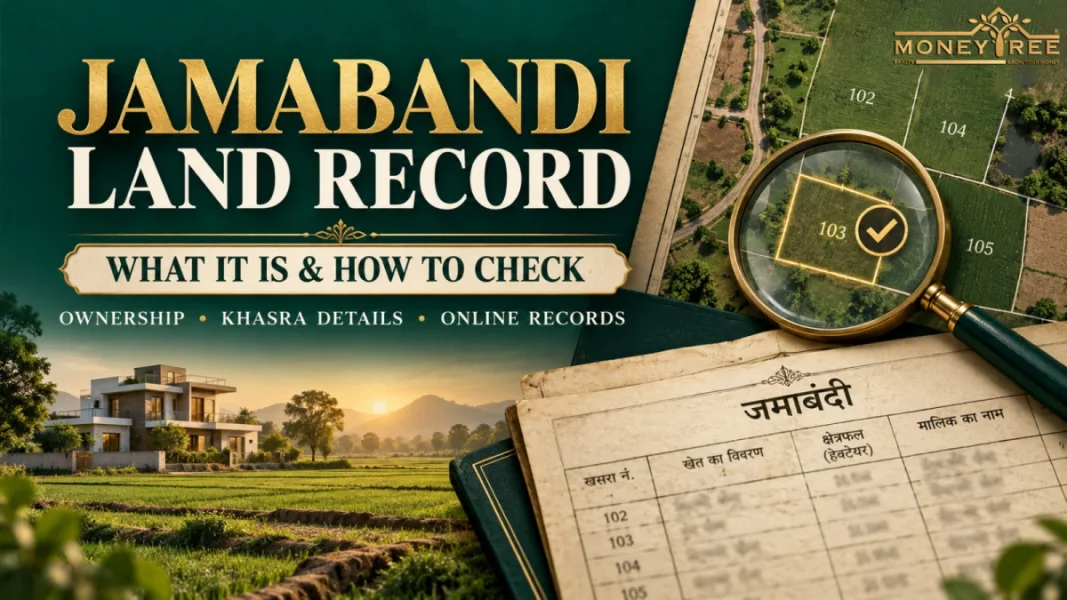
Jamabandi Land Records is one of the vital sources for land ownership details and other property information in India. The Jamabandi Land Records usually consist of basic information like the name of the owner, Khasra number, Khata number, land area, and other land ownership information. As Jamabandi land records are available online, people now find it easy to get their land records and verify Jamabandi Nakal.
To find out about Jamabandi and to learn about its significance, along with learning how to verify it online, this article will be able to give you all the details. In this article, you will learn about the significance of land records and all the details that can be found in Jamabandi, along with verifying Jamabandi online.
What Is a Jamabandi Land Record?
A Jamabandi land record is the official RoR (Record of Rights) of a particular land under the jurisdiction of the revenue department in the states of Haryana, Punjab, Himachal Pradesh & Rajasthan and some areas of Uttar Pradesh. The record is usually revised and updated after every 5 years and serves as an updated list of land ownership in a revenue village.
Originating from the Mughal period and British Raj, the Jamabandi system of revenue collection was created for systematic collection of land revenue. With time, the document has transformed from a land revenue assessment register to a comprehensive land ownership record. Whenever the Jamabandi is revised by a revenue officer (Patwari), details of all existing land ownership along with any active mortgage, lease, and cultivation are compiled in the document.
A Jamabandi land record lists the legal owners of a land parcel, their share of ownership percentage, the size and dimensions of the land, and any existing loans or mortgages registered against the property. However, a Jamabandi is not considered conclusive proof of ownership in Indian courts. Instead, the document is used as evidence of possession and rights of possession under the land revenue act of respective states.
What Details Are Mentioned in a Jamabandi?
A Jamabandi land record document lists relevant information about the land parcel including the name of the owner(s), type and size of the land, and additional references such as Khewat and Khasra number. As a buyer, it is important that you understand each component of the document to ensure that there are no disputes regarding land possession after the purchase.
Owner's Name
The document mentions the name of the registered owner (Malik) including his/her father's and grandfather's name and permanent address. In cases of joint ownership (Patti or Shamlat), the share of each owner must be mentioned in the document to prevent disagreements over individual selling of shares.
Khewat Number
Also known as the Khata number, a Khewat number is the account number of a group of joint owners or an individual owner in a village revenue record.
Khatouni Number
A Khatouni number is a cultivator number, under which the cultivator (either owner or tenant) is registered for a particular Khewat number. In cases where the land owner cultivates his own land, the record mentions Khudkasht. However, if there are tenants under the owner, their details are mentioned under the owner's Khatouni number.
Khasra Number
The record mentions the survey number or plot number of a land parcel according to the state revenue department.
Land Area
The land area is mentioned in terms of Kanal, Marla, Bigha, Biswa, Square Yards, or Acres depending upon the state.
Type and Use of Land
Depending upon the water source and utility, Jamabandi records categorize land into Chahi (well/tubewell irrigated), Barani (rain-fed), Gair Mumkin (non-cultivable/built-up areas), and Banjar (waste/fallow land).
Cultivation and Possession Details
The record mentions the cultivator (Kashtkar) and details about his share of possession. In cases where the registered owner does not physically possess the land, the cultivator's details are also mentioned in the document. This helps in determining illegal possession of land by tenants, mortgagees, etc.
Revenue and Other Recorded Rights
The revenue and cess details of the land are mentioned in the last few columns of the document. Any encumbrance on the property including bank mortgage, court injunction, lease, or government attachment of land is also mentioned in this section.
How to Check Jamabandi Land Records Online?
With the introduction of the digital India initiative, checking government revenue records online has become a lot more convenient for property buyers. Now, buyers do not have to physically visit the local Tehsil offices to inquire about land records of a property.
Steps to Check Jamabandi Land Records Online
Practical Example: Punjab Jamabandi Portal
To check land records in Punjab, visit jamabandi.punjab.gov.in. Click on the Jamabandi option and choose the district, tehsil, village, and year of your property. You can select your search parameter to search land records by owner name, khewat number, khasra number, or khatouni number. Searching by owner (Malik) name will provide you with a list of properties present in that particular village under the owner's name. In addition, the document will also show you any active bank mortgage or court dispute under an owner's name.
Practical Example: Haryana Jamabandi Portal
To check land records in Haryana, visit jamabandi.nic.in. The portal mentions various options to check Nakal Jamabandi, revenue court case status, deed registration, and court order details according to Khasra numbers.
State-Wise Jamabandi Land Record Portals
Each state has its own land revenue management system and separate portals for property owners to check land records online.
Haryana Jamabandi
The official website of Haryana Jamabandi is jamabandi.nic.in. The portal mentions various options of Nakal Jamabandi, revenue court case status, deed registration appointments, and property mutation details for all Haryana districts.
Punjab Jamabandi
The Punjab land record portal jamabandi.punjab.gov.in provides digitized copy of Record of Rights, property registration services, collector rates, and encumbrance details of land in Punjab.
Other State Land-Record Portals
How to Find the Official Portal for Your State?
To search for an official portal, visit the Digital India Land Records Modernization Programme (DILRMP) portal or the official page of your state. Make sure that you always visit a genuine portal with a gov.in or nic.in domain to avoid any phishing or spam sites.
What Is the Difference Between Jamabandi, Khasra, Khewat, and Khatouni?
The terms Jamabandi, Khasra, Khewat, and Khatauni can be confusing when trying to understand land records. The reason for this is that each of these terms indicates something different related to the land. Having knowledge of these terms would be useful in verifying property information and land ownership details.
Jamabandi vs. Khasra vs. Khewat vs. Khatouni
| Record / Term | Primary Definition | Key Purpose | Identifier Focus |
| Jamabandi | Comprehensive Record of Rights (RoR) register compiled every five years. | Documents overall ownership, possession shares, land type, and liabilities. | Comprehensive village revenue record. |
| Khasra | Individual plot survey number assigned to a specific field parcel. | Maps geographic boundaries, physical soil quality, and crops grown. | Specific plot or parcel identifier. |
| Khewat | Account/holding number assigned to an owner or group of co-owners. | Identifies total legal ownership holding within a village revenue circle. | Owner or joint-ownership group reference. |
| Khatouni | Cultivation or occupancy account number assigned to land cultivators. | Tracks who physically cultivates or occupies specific plots under a Khewat. | Cultivator, tenant, or occupant reference. |
Why Is Jamabandi Important for Property Owners and Buyers?
The Jamabandi register is one of the vital documents used in the property verification process since it contains vital information regarding land ownership and possession among others. If you are a property owner or someone who wants to acquire a piece of property, you can use the Jamabandi register to spot any discrepancies.
While performing legal due diligence for the property purchase, buyers must verify the authenticity of the Jamabandi by comparing it with other property papers. This will not only verify the owner’s information but may also detect any discrepancy in the records of the land.
Acquiring land without doing a proper verification of the Jamabandi record could put the purchaser in a dispute regarding ownership and other legal matters. Consequently, it becomes imperative that prior to buying any property, the Jamabandi record is verified via the internet.
Primary Reasons to Inquire Jamabandi Record
Jamabandi vs Mutation: What Is the difference?
A buyer must understand the key differences between Jamabandi and Mutation (Intakal) to avoid legal complications while transacting a land or property.
Meaning of Jamabandi
Jamabandi is a combined land revenue book also called Record of Rights that captures the comprehensive view of village land ownership, tenancy, area, liabilities and so on. It is revised after every 5 years by revenue staff.
Meaning of Mutation
Mutation is a process of updating the land revenue register in case of a purchase, ancestral claim, gift deed or court order. Whenever a transaction alters owner information, the revenue authority makes an Intakal entry in the register to transfer property rights.
How does a Mutation Impact Land Records?
Once a mutation entry is approved by Tehsildar, the records are updated to reflect new owner details; however, these details are merged with a consolidated master record only during the next round of Jamabandi revision process.
Why should one check Jamabandi and a Mutation Slip?
Checking only a Jamabandi might miss out on the latest owner details that would have taken place after the last set of record revision. Whereas, looking out only at a mutation slip may miss out on past liabilities, bank charges, encumbrances or joint ownership claims. Both the documents provide a complete view on a given property's revenue history.
What Should You Check in a Jamabandi Before Buying Land?
Any payment and purchase of land need to be done only after verifying the details of the Jamabandi land document. By checking the details, you may be able to ascertain ownership, find out about any discrepancies and avoid problems in the future.
These are the details you should verify from your Jamabandi:
Common Issues while Checking Jamabandi Online
However, searching through Jamabandi land records via the internet is a time-saving process but there might be some inconsistencies. Buyers must scrutinize the information they receive from the internet before making any decision regarding a purchase. The following are among those that might appear:
Whenever facing such issues, buyers must request a physical copy of Jamabandi records (Nakal Jamabandi) from the concerned Sub-Register or Tehsil offices.
Conclusion: Check Jamabandi Before Making a Land Transaction
Conducting a proper investigation of the land or property that is to be bought is of utmost importance. Through the Jamabandi, the potential buyer will be able to find out some important information, such as the right of possession of the land, its classification, whether the land is jointly owned, and the presence of any encumbrances or liabilities. If you want to buy either agricultural land, a residential site, or a commercial property, it is advisable to investigate the Jamabandi.
The task of selecting the ideal property, along with handling the documentation related to the same, might be difficult, particularly when making a substantial investment. However, one can make use of the expertise of specialists to simplify the process. This can be done through Money Tree Realty, which is one of India's most trusted real estate advisors.
Looking for the right real estate investment opportunity? Contact us today at +91-9732300007 and speak with our RERA-certified real estate experts to find suitable residential and commercial properties for your investment goals.
Frequently Asked Questions