




Table of Contents
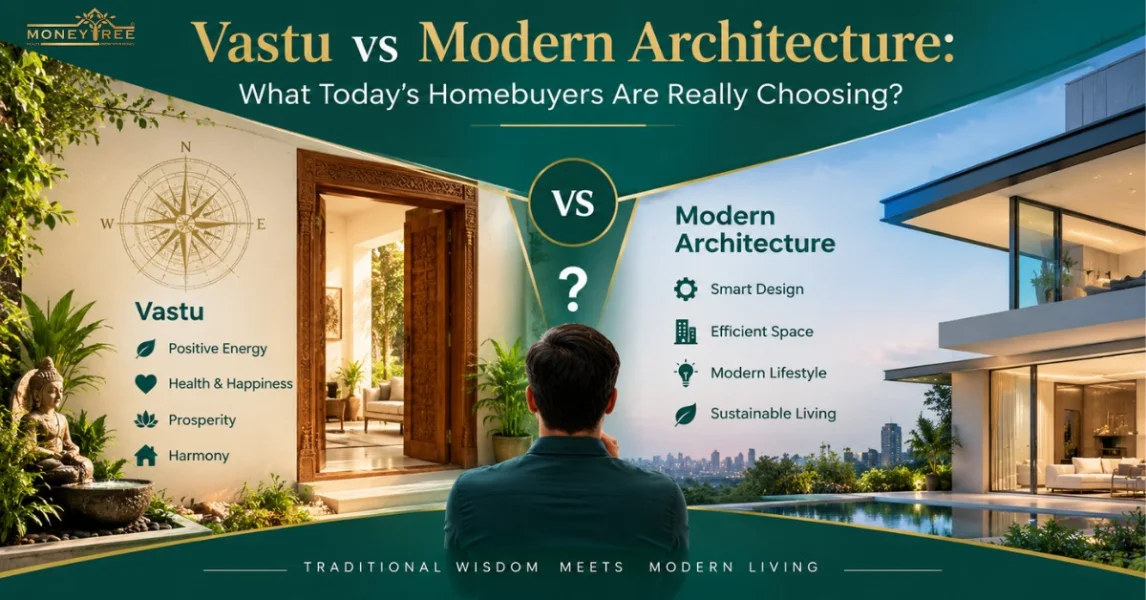
When it comes to selecting a place in India, homebuyers consider elements other than the cost of purchase and the location of the property. In many cases, the design, orientation, and energy of the house become equally important. On the other hand, with the advancements in architecture, issues such as function, appearance, technology, optimisation of space, availability of light, and ventilation have gained a lot of importance. Thus, the debate on Vastu Shastra vs Modern Architecture is no longer an either/or situation.
Modern-day buyers are also looking for houses that match their personal philosophies but at the same time fulfil all the requirements of today’s lifestyles. They might be looking for Vastu for homebuyers, but they also need a practical layout.
A perfect house would combine the concepts of Vastu as well as those of modern architecture, without sacrificing location, construction, utility, and value. In today's modern world, it should be about blending tradition and modernity into one.
What is Vastu Shastra in Home Architecture?
Vastu Shastra is an ancient Indian architecture framework that deals with the connection among building, site, and its directionality. It also governs the placement of spaces as well as the layout of a property based on direction.
Basic Principles of Vastu
The system of Vastu generally focuses on directionality, orientation, proportionality, and placements for respective spaces within an apartment or home.
Direction, Orientation and Room Placement
For a house, directionality, placement for entrance, kitchen, bedroom, hall, etc are given much importance in accordance with Vastu.
Why Vastu Continues to Influence Indian Homebuyers?
The continued relevance. One significant factor explaining why Vastu is still influential is that a lot of potential customers would see it as something that meets their cultural beliefs as well as personal comfort. This is why the demand for Vastu-compliant apartments in India is ever-present in numerous categories of residential real estate.
What is Modern Architecture in Residential Design?
The current trend in the architecture of residences revolves around the idea of building houses which cater to the requirements of the new homeowner. Whereas the preference of home buyers towards Vastu in India still persists, the idea of modern design concentrates on the efficiency of use of a house by its occupants on a daily basis.
Open and Flexible Floor Plans
People will enjoy the more spacious feel given by open-plan living rooms connected with the kitchen and dining room.
Natural Light and Ventilation
More people will love the amount of natural light and fresh air through windows or openings on various sides.
Space Efficiency and Functionality
Modern architecture makes houses more liveable by fully utilizing space through efficient layouts, built-in features, and multi-functional zones.
Smart and Sustainable Home Features
Future houses will likely include smart security, automatic lighting systems, energy-saving appliances, water-saving solutions, and other modern tech-enabled features.
Vastu vs Modern Architecture: What’s the Difference?
Perhaps the most notable contrast in Vastu vs Modern Architecture lies in the core ideology of their design.
Vastu uses traditional concepts in layout design, including the direction and location of spaces, whereas Modern architecture typically focuses more on form, utility, beauty, technology, and sustainable aspects of architecture.
Thus, one modern house might plan an open living space arrangement for better integration and space management, while a Vastu house plan will tend to centre on how room directions influence, or could potentially harm, the inhabitation of the house.
But of course, one could also create houses that successfully integrate some of the directional and positioning theories that come with Vastu, while also keeping in mind the contemporary principles of effective layout planning.
What Are Today’s Homebuyers Actually Looking For?
Homebuyers of today want much more than just a dwelling. Whereas aspects such as price and location have always played an important part in making decisions concerning property, other aspects are now being taken into consideration by homebuyers.
Vastu Compliance
For many home buyers from India, Vastu is an important factor to be considered while choosing a house. Issues like direction of the entry door, position of rooms, and positioning of the kitchen and bedrooms may become determining factors while choosing a house. Thus, for some home buyers, Vastu for home buyers becomes an important issue.
Location and Connectivity
For the majority of buyers, access to workplaces, educational institutions, hospitals, other facilities (markets, post office, banks, train, bus station), major roads and public transportation are usually more crucial than interiors.
Natural Light & Ventilation
Bright, well-ventilated homes offer greater comfort and reduce the need for artificial lights and air conditioners.
Spacious and Practical Layouts
The modern home buyer prefers usable and functional spaces rather than just large floor areas. Effective floor layouts go a long way in enhancing day-to-day comforts.
Privacy & Comfort
The location of bedrooms, access to balconies, and segregation of common and private areas are considerations for several of them.
Smart Home Features
Security features, smart access systems, smart appliances, and digital locks are steadily gaining the attention of new-age home buyers.
Sustainability and Energy-Efficiencies
Buyers interested in sustainability and environmental impacts of their living spaces are likely to favour homes that utilize renewable energy and have energy-efficient fixtures.
Vastu-Compliant Homes vs Modern Homes: Which is Better?
There is no right or wrong when making a comparison between Vastu compliant homes and modern homes. It all boils down to your lifestyle, preferences, beliefs, and what you expect from a property. For some Indian homebuyers, the perfect house might actually incorporate aspects of Vastu while at the same time being a modern architectural design.
If you’re thinking about using Vastu for home buyers, knowing the strengths and weaknesses of both sides will help you make an informed decision. Below is a look at the main pros and cons of each one.
Benefits of Vastu-Compliant Homes
For the traditional-inclined home buyer, the buyer consciously follows Vastu. It could make the house more valuable on resale. Some homeowners have a deep personal connection with Vastu.
Harmony: A house following the Vastu guidelines may offer a feeling of harmony and peace for the people inhabiting it.
Connection to culture and traditions: The guidelines will enable people to include traditions and customs into their houses.
Efficient planning of space: Careful thinking about the positioning of the rooms will result in an efficient process of designing homes.
Appeal to the buyer: Houses that follow the Vastu guidelines may become appealing to people who take Vastu into consideration when choosing a house.
Inner peace: For people who believe in Vastu, houses that follow Vastu guidelines will give them peace.
Re-sale: Houses that follow Vastu guidelines in markets where such houses are valued can increase their resale value.
Benefits of Modern Architectural Design
Architectural designs of today emphasise the construction of houses that are convenient, functional, and flexible to accommodate the varying requirements of homeowners. The major advantages of such architectural designs include:
Limitations of Both Approaches
Both styles have one drawback:
Why the Answer Depends on the Buyer
Ultimately, Vastu is something that matters to a specific group of homeowners. For some house-buyers, other factors like location, floorplan efficiency, construction quality and amenities may mean more than following the principles of Vastu.
Can Vastu and Modern Architecture Work Together?
Yes. It’s now quite possible to build modern apartments with Vastu considerations, as many Vastu guidelines may be adhered to during the planning, and it really does not affect the modern architecture.
Vastu-Friendly Modern Floor Plans
An architect can take the user’s preferences while incorporating them in an aesthetically and functionally planned room configuration.
Using Orientation Without Compromising Aesthetics
A user can still implement Vastu principles related to room placement and the home entrance while sticking to a modern structure.
Balancing Vastu with Natural Light and Ventilation
Directional preferences do not stand in the way of providing optimum windows, light, and airflow to the house. The two elements can be implemented together with correct planning.
Modern Kitchens, Bedrooms, And Living Spaces with Vastu Considerations
Modern kitchens, bedrooms, and living rooms can still comply with the Vastu guidelines while implementing desired storage, appliance configurations, furnishings, and textures in their structure.
Which Vastu Features Matter Most When Buying a Flat?
If Vastu matters to you, it may prove beneficial to incorporate certain elements into your home purchasing checklist. It is not just the evaluation of separate rooms in relation to Vastu but also the floor plan, entrance, and light of the house as a whole.
Main Entrance Direction: Assess the main entrance's direction and placement according to the Vastu systems you trust.
Kitchen Placement: Some people's Vastu principles focus on the position and direction of the kitchen.
Bedroom Positioning: Evaluate the position and orientation of the master bedroom and other bedrooms, as per Vastu systems.
Pooja Room: Buyers who plan to set up a dedicated area for worshipping should examine if floor space can accommodate a perfectly suitable room.
Balcony and Natural Light: Investigate the positioning of balconies and windows and observe their impact on natural sunlight and ventilation.
Overall Floor-Plan Layout: Instead of looking into each room in isolation, check how the building layout fits together as a whole.
Modern Features Homebuyers Should Not Compromise
No matter how much significance you attach to Vastu Shastra, there are some aspects that you should consider when buying your property. While Vastu Shastra can aid in setting your preferences regarding the orientation of your house, some aspects like utility, ventilation, safety, and energy savings directly affect your quality of life.
Carpet Area and Usable Space: Instead of fixating on a super built-up area, pay attention to the actual usable space within the property.
Ventilation and Daylight: Pay heed if the property can accommodate natural light and ventilation well within its premises.
Storage: Adequate wardrobes, kitchen storage, and utility spaces can enhance the liveability of a house significantly.
Parking: Assess if proper and usable parking spaces are available on the premises.
Security: Gated communities, CCTVs, security guards, smart access control systems, etc are some parameters that contribute to the residential security of a home.
Energy Efficiency: Look out for smart electricity, water usage reduction measures, and energy-efficient lights and appliances, etc to avoid long-term expenditure on utility services.
Smart-Home Infrastructure: Check if the apartment or villa has the infrastructure required for installing smart locks, automated lighting, security cameras, and home security systems.
Does Vastu Affect Property Value and Resale Demand?
Vastu may affect the marketing of the property, especially for those individuals that see significance in the principles of architecture when buying a house. Nevertheless, vastu is only one of many possible variables affecting the marketing prospects and value of the real estate.
Buyer Preference and Marketability: A Vastu-compliant property is likely to attract more buyers considering Vastu crucial.
Vastu as Resale Considerations: For two perfectly similar properties in terms of infrastructure and quality, Vastu may play a supplementary role for select buyers deciding between the two.
Vastu vs Practicality: What Should You Prioritise?
In the case of buying a home, it is not necessary to compromise on either the buyer’s preference for Vastu and practicality. In most cases, the buyer desires a house that has both Vastu and practical elements.
When Vastu Should Influence Your Decision
Vastu for house purchase decisions. Vastu should be one among many other criteria while deciding about house purchase, if it matters to you and your family personally.
When Functionality Should Take Priority
Ventilation not meeting the required standards, unusable layout of the house, scarcity of parking and space for cars, lack of connectivity, or major structural defects shouldn't be overlooked for a house, no matter if it is Vastu compliant or not.
How to Evaluate Two Similar Properties
Similarly priced and located homes should be weighed, considering their floor plans, Vastu considerations, natural light, ventilation, privacy factor, storage capacity, and resale value.
How to Choose a Home That Balances Vastu and Modern Living
Balancing the requirements of Vastu along with meeting the challenges of modern life can be done in such a way that you choose a house taking all factors into account rather than just considering one particular factor.
Create a Homebuying Checklist: List not just the Vastu needs but also all your physical requirements that include budget, location, sizes, and facilities that come with the house you seek.
Compare Floor Plans: Don't just get charmed by the show apartment or the interiors of the house; take a realistic look at the floor plans and the usable space.
Check Light, Ventilation & Usability: Check out the space at any time of the day or, if possible, throughout the day if you can make a visit and estimate natural light, ventilation of that place, noise, etc.
Consider Long-term Resale Potential: The location of the house, its cost, and its usability must be such that it will sell when you need to.
The Future of Home Design in India: Vastu + Modern Architecture
Developers and architects will have to reconcile modern design features with indigenous beliefs in residential construction going forward in Indian cities.
For instance, Vastu elements will have to be built into floor layouts, but the house itself would simultaneously provide ample daylight, be eco-friendly, have spaces that could be reconfigured, and smart-home infrastructure. This blend will offer a sense of cultural comfort yet accommodate modern needs.
Conclusion: Today’s Homebuyers May Not Be Choosing One Over the Other
It is not always necessary that the choice be between Vastu vs modern architecture. The present generation of buyers expects a mixture of both tradition and the benefits of modern times. Aspects like natural light, air, space planning, privacy, use of technology, and sustainability are equally important along with the consideration of Vastu.
A home that is well-designed in terms of planning can also apply the principles of Vastu without compromising the comfort and functional requirements of an up-to-date building. Hence, for Vastu for home buyers, one should look for balance instead of going either way.
Ultimately, the ideal choice will depend upon your personal needs and preferences. Before you make your decision, you must look into the entire picture, including the layout, location, connectivity, facilities, construction, space, and future value.
If you are searching for a property and require professional advice to strike a balance between your personal tastes and investment objectives, Moneytree Realty, which is India's Most Trusted Real Estate advisor, will be able to assist you in making an informed decision.
Get in touch with us at 9732300007 for the Best Real Estate Consultation in India and find a property that aligns with your needs, lifestyle, and long-term aspirations.
Disclaimer: The principles of Vastu Shastra are a belief, and no scientific claim is made for its benefits about health, prosperity, and growth of property value. The impact of Vastu may differ for every individual and practitioner. Property prices, sizes, configurations, and specifications are subject to change at the discretion of the Developer without prior notice. All buyers should undertake proper legal, financial and technical due diligence before purchasing or booking a unit.
Frequently Asked Questions