





Table of Contents
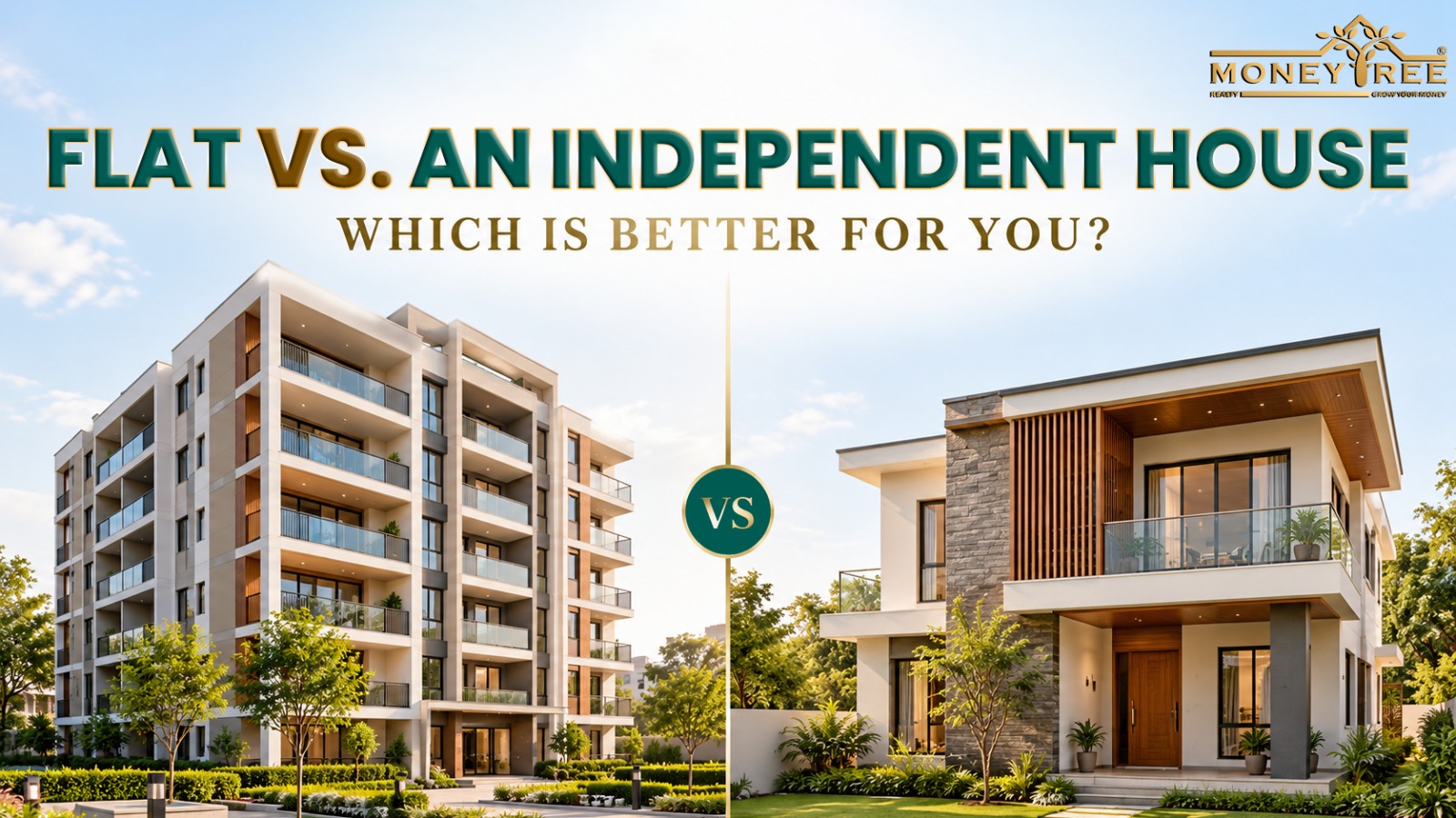
Buying one's own house is a great emotional and financial commitment. However, being in the real estate market, one of the most crucial decisions you have to make is: should you go for a flat or independent house?
Firstly, flats in the contemporary housing market are equipped with various amenities and services. Independent houses offer more privacy, freedom and flexibility, as well as full ownership of the property (unless otherwise stated in the property papers).
The selection of a flat or independent house to purchase does not depend only on your current finances but also on the nature of your family, its needs, maintenance costs, and expectations of property's growth in price and return on investment (ROI).
In this article, we are going to analyse the difference between a flat and an independent house, compare their prices, benefits and drawbacks, as well as the investment value they provide. We are also going to analyze ownership rights, maintenance expenses, and other important points to consider while purchasing a property.
What Is the Difference Between a Flat and an Independent House?
To make an informed decision about purchasing a flat or an independent house, one should know what sets these types of properties apart from each other. Each type of housing provides a variety of benefits, so it is essential to be aware of them to pick the one that meets your requirements regarding your budget and financial perspective.
Flat (Apartment): A flat means that it is a type of housing that does not occupy the entire structure but just a portion of a larger building or a community. In buying a flat, you get ownership of the inner space along with the land below the building.
Independent House: It is an independent building standing on its own piece of land. You not only have complete ownership of the construction but also have ownership of the entire land area of the building.
Flat vs. Independent House : Key Differences At a Glance
Making a choice between flats and independent houses depends upon your financial resources and requirements. If you prefer modern facilities, then you can opt for flats, but if you want privacy and a larger area of land, then independent houses will suit you. Below are the differences in a nutshell.
| Feature | Flat (Apartment) | Independent House |
| Land Ownership | Undivided share of land | 100% ownership of the plot |
| Privacy | Shared spaces, close neighbors | High privacy, no shared walls |
| Security | 24/7 gated security, intercoms | Self-managed security systems |
| Amenities | Gym, pool, park, clubhouse | Custom-built, but usually no shared amenities |
| Maintenance | Managed by a society (monthly fees) | Handled entirely by the owner |
| Customisation | Limited to interior changes | Complete freedom to remodel or rebuild |
Buying a Flat: Advantages and Disadvantages
For individuals looking for convenience, safety, and modern amenities, buying a flat is an ideal choice. But one must look into the pros and cons to see whether a flat is the best option for them or not.
Pros of Buying a Flat
A Secured Community: Facilities like 24-hour security, CCTV cameras, and guarded entrances make gated communities a good choice for small families or couples who are working.
Modern Amenities: Flat owners get amenities like swimming pools, gyms, kids' play areas, and even power backup, without worrying about managing them.
Hassle-Free Maintenance: Maintenance activities for common areas, lifts, and water facilities are the responsibility of the resident welfare association or society management.
Easier Financing: Financing for apartments is generally easier through banks when done within an approved gated community project.
Cons of Buying a Flat
Monthly Maintenance Charges: You will have to make regular monthly payments for maintenance to the club, regardless of the usage level of facilities.
Lack of Privacy: Living with neighbours can create problems of noise and less personal privacy because of the shared spaces such as walls, corridors, and lifts.
Constraints: Societies generally impose many restrictions on pets, parking, and renovations in apartments.
Loss of Structural Value: When the value of land increases, the structure of the apartment becomes old and may require redevelopment after some years.
Buying an Independent House: Advantages and Disadvantages
The purchase of an independent house offers good choices to those buyers who look for privacy and space in their homes, along with more control over their property. By purchasing the house and the land, buyers can have much more freedom and chances for making more investments. However, there is also the cost of independence.
Pros of Buying an Independent House
Complete Privacy: There are no shared walls, and you do not have to endure any neighbours overhead.
Total Freedom and Customisation: You have the freedom to carry out any renovations, painting, adding more stories, or rebuilding your house anytime you wish, without getting permission from the society.
Higher Land Appreciation: Due to owning the land underneath, land appreciates much faster and more effectively in independent houses than in any other form of housing.
No Monthly Maintenance Fees: It is you who gets to choose both the time and the manner in which you use your money for repairs.
Disadvantages of Buying an Independent House
Higher Initial Cost: Purchasing the land and building the house is likely to demand considerably more money upfront.
Sole Responsibility for Security and Maintenance: From repairing a leaking roof to employing private security guards, all the obligations and expenses lie completely on your shoulders.
Familiarity with Amenities: Single homes do not come with any community amenities such as swimming pools or parks unless you build them yourself in a big piece of land.
Flat vs. Independent House: Which Is More Affordable?
While evaluating flats vs independent homes, cost cannot be considered only in relation to the price of buying the real estate. Other factors include registration costs, maintenance fees, taxes on the property, and the costs involved in repairing the real estate in the long run. Though flats are relatively cheaper than independent homes, the latter requires much more money initially.
Initial Purchase Cost and Additional Charges
In the case of a comparison between the price structure of an apartment and an independent house, the flat will always be cheaper than the independent house. The cost of acquiring a 2 BHK or 3 BHK flat is known at the time of purchase. In contrast, the acquisition of land to build the house or an already constructed independent house in a good locality involves a much higher cost.
Maintenance and Repair Costs
Property Tax and Other Expenses
Individual homeowners pay relatively high municipal property taxes as compared to flat owners since they are the total owners of the land. The flat owners pay their respective shares of property taxes based on the proportionate areas that they occupy within the land.
Flat vs. Independent House: Which Is Better for Investment?
The decision between a flat vs. an independent house for investment is based on your financial objectives, budget, and the tenure of your investment. Independent houses can be more exposed to the gains made from land appreciation, while flats can have very good rental returns as well as good property management options. Property appreciation, rentals, resale and returns on investment will help make your decision.
Property Appreciation and Land Value
Land value is the main reason behind property value. As you get 100 per cent ownership of the land in the case of an independent house, its land value rises very quickly. But the value of the building structure does not rise as fast as the flats because its construction has already been completed.
Rental Income and Resale Potential
Which Is Better for Families, First-Time Buyers and Retirees?
Deciding whether to go for a flat or an independent house will depend on the individual’s level of life, family size, financial standing, and choice of lifestyle. While flats are convenient and secure and provide for social living, independent houses give more privacy and freedom. Below is a guide to selecting a property.
Legal Checks Before Buying a Flat or an Independent House
You must do the proper legal checks before buying any flat or house. It will help you to get all information related to the legality of that property. It will help you to invest safely without any future disputes. Here is the list of legal checks that one should do prior to buying any property.
Flat vs. Independent House: Which Should You Buy?
A choice between the two would depend upon many things, including your finances, living style, and family needs. There are unique strengths to each one of them; therefore, you need to make your choice according to your personal likes and dislikes.
Conclusion: Choosing the Right Property for Your Budget and Lifestyle
Deciding whether to buy a flat or an independent house finally boils down to your budget and individual considerations. The former will allow you to enjoy modern facilities along with security and ease of life, while the latter provides more privacy, flexibility and land appreciation in the long run. Before taking your final call, it is essential to assess your financial standing, conduct the necessary research about the area and complete all required legal formalities.
Are you ready to make your dream of owning a home come true? Reach out to Moneytree Realty, India's most trusted real estate advisor, for all your requirements. Whether you are searching for an apartment or a standalone house, we at Moneytree Realty will help you discover the perfect property.
Begin your path to owning your dream home through Moneytree Realty today. Contact us now at +91-9732300007.
Frequently Asked Questions