






Table of Contents
Introduction to Flat vs Apartment
Definition
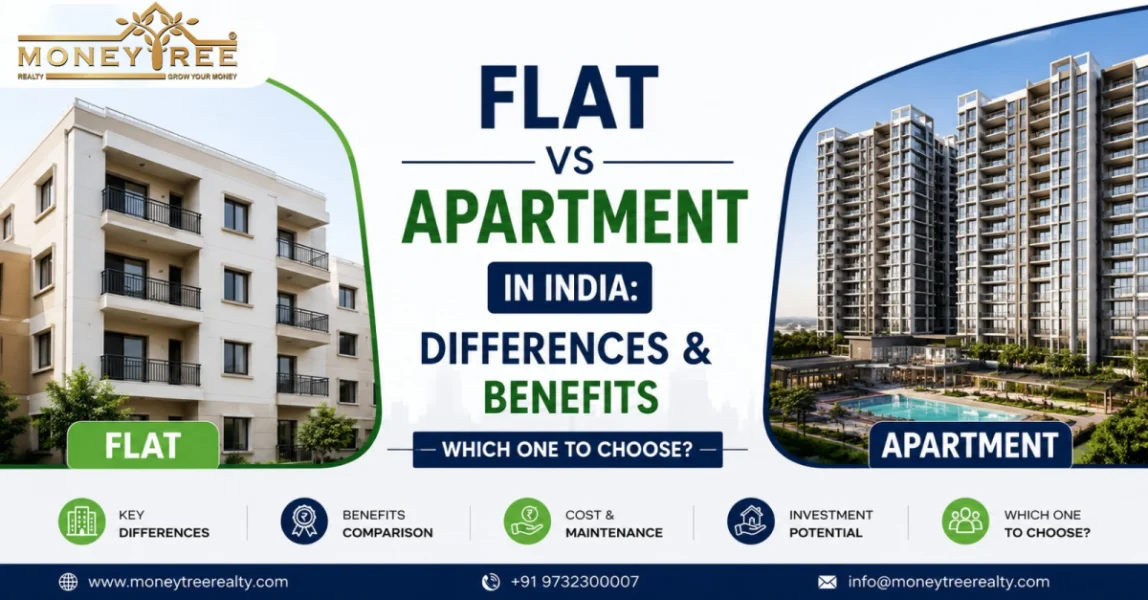
A flat is a residential unit on a single floor within a building, containing rooms that function as a complete home: bedrooms, a kitchen, bathrooms, a living area. The word comes from the old British "flat", meaning a floor or storey. When somebody in Lucknow or Kanpur says they bought a flat, they almost always mean a unit in a multi-storey residential building.
Key Features of Flats
What is a flat in everyday Indian usage? Usually it's a more functional, no-frills description. When buyers say flat, they're often picturing something practical. A 2 BHK in residential society, maybe with a lift and a watchman, basic parking, a small park downstairs if they're lucky. The term carries a slightly more modest, middle-class connotation in a lot of Indian cities, though that's a perception thing, not a rule written down anywhere.
Flats can range from a single-room studio setup all the way to large multi-bedroom units. Size isn't what defines them.
Where Flats Are Common
You'll hear "flat" used heavily across North India, in tier-2 and tier-3 cities, and in older housing colonies built by development authorities. Walk through parts of Delhi, Ghaziabad, or older Noida sectors and "flat" is the default word. It's just how people talk there.
What is an Apartment?
Definition
An apartment is, technically, also a self-contained housing unit within a larger building. Same physical thing as a flat. The word arrived through American English (from the French "appartement"), and in India it has picked up a slightly more premium flavour. When a developer markets "luxury apartments", they're leaning on that connotation deliberately.
Key Features of Apartments
So what is an apartment when an Indian builder uses the term? Often it signals a gated community with a bundle of amenities. A clubhouse, a swimming pool, a gym, landscaped gardens, multi-tier security, power backup, maybe a jogging track. The flat vs apartment meaning, in practice, has drifted so that "apartment" implies a fuller lifestyle package, while "flat" implies the home unit itself. I've seen identical 3 BHK units in two adjacent towers marketed as a "flat" in one brochure and an "apartment" in another, purely based on positioning.
Types of Apartment Living in Gurugram
There's quite a bit of variety here. You've got standard apartments, studio apartments, serviced apartments (where housekeeping and sometimes meals are included, popular with corporate tenants), penthouses on the top floors, and duplex apartments spread across two levels. Some of the premium projects we deal with in Gurugram and Noida offer all of these within a single township.
Flat vs Apartment: Key Differences Explained
Let me break down the flat vs apartment comparison the way it actually plays out on the ground, not in theory.
Terminology & Usage
This is the core of it. The flat and apartment difference is, at root, linguistic. British versus American origin. In India we use both interchangeably in casual speech, but builders and marketers tend to reserve "apartment" for higher-positioned projects. So when you're reading listings, don't assume an apartment is automatically superior to a flat. Read the actual specifications, the carpet area, the amenities list, the builder's track record. The word on the brochure tells you almost nothing reliable.
Amenities & Facilities
This is where a genuine flats vs apartments amenities comparison becomes useful. Generally, units sold as apartments come attached to more shared facilities. Clubhouse access, swimming pool, gym, gated security, visitor management, and so on. A flat in a standalone building might offer just a lift, a watchman, and parking, nothing more. That said (and I cannot stress this enough), this is a tendency and not a law. I've toured plenty of buildings labelled flats that came loaded with amenities, and a few "apartment" projects that were surprisingly bare once you actually visited (which is depressingly common, by the way).
Building Structure
Structurally, there's no fixed difference. Both sit inside multi-unit buildings. An apartment complex might be larger, with multiple towers and a bigger footprint, while a flat could be in a smaller four-storey building without a lift. But you'll find exceptions everywhere. The construction quality, the RERA registration, the approvals: those are what you should be inspecting, not the noun.
Cost & Pricing
Is flat cheaper than apartment? Often, yes, but not because of any inherent quality gap. It's the positioning. Projects branded as apartments target a premium segment and price accordingly, especially the ones bundling clubhouses and pools and concierge-style services. A flat in a no-frills society in the same locality might cost noticeably less for a similar carpet area, simply because you're not paying for the lifestyle layer. So part of the price you pay for an "apartment" is for the amenities and the brand promise, not the four walls.
Maintenance & Lifestyle
Here's a practical point buyers forget. Apartments with heavy amenities come with heavier monthly maintenance charges. That swimming pool and clubhouse and 24-hour security cost money to run, and it shows up in your maintenance bill every single month, year after year. A simpler flat means a lighter recurring cost. I always tell clients to calculate the maintenance over ten years, because that number gets large and it rarely goes down.
Flat vs Apartment in India: Usage Trends
Going by what I see across our markets, the word usage splits roughly along regional and marketing lines. In Mumbai, "flat" dominates everyday speech regardless of how premium the building is; even a sea-facing crore-plus home in a tower gets called a flat. In Bengaluru and the newer Gurugram and Noida townships, "apartment" has become the fashionable term, pushed hard by developer marketing. The difference between apartment and flat in India is, frankly, more about geography and branding than about anything structural. A meaningful chunk of buyers I meet have no idea the words are essentially synonyms until I explain it.
Legal Difference Between Flat and Apartment
Now this part is worth slowing down for, because here's where the apartment vs flat legal difference India question gets a little more substance.
In legal and regulatory documents, the word "apartment" actually has more formal standing in some Indian states. Several states adopted Apartment Ownership Acts (Maharashtra, Karnataka, Haryana, and others have versions of these), which govern how ownership of units, common areas, and undivided land share are structured in multi-unit buildings. The word "flat" appears in older state legislation too, like the Maharashtra Ownership Flats Act. So in legal terms, both words exist in statute, and what genuinely matters for you as a buyer is the ownership document itself, the sale deed, the share of common areas, and the RERA registration, not whether the cover page says flat or apartment.
When you're signing paperwork, read what rights you're actually getting over the unit and the common areas. That's the real legal substance. The label is just a label.
Which is Better for Living: Flat or Apartment?
Honest answer? It depends entirely on how you live. If you're a young working professional or a small family that values a gym downstairs, a pool, a kids' play area, and tight gated security, then an amenity-rich apartment project earns its higher cost. If you're someone who'd rather pay less every month and doesn't care for a clubhouse you'll visit twice a year, a straightforward flat makes far more sense. I had a retired gentleman in Greater Noida last winter who specifically wanted a no-amenity building because he hated the idea of paying maintenance for a pool he'd never use. Smart man.
So the apartment vs flat, which is the better question really turns into: what do you actually use, and what are you willing to pay monthly for the rest of your life there?
Flat vs Apartment for Investment
Now for the part investors care about most. When we look at flat vs apartment for investment, the labels matter even less, and the fundamentals matter even more.
Rental Income Potential
For flat vs apartment for rental income, amenity-rich apartment projects in good locations often command higher rents, particularly from corporate tenants and expatriates who expect a gym, security, and managed facilities. A bare flat rents for less but also costs less to buy and maintain, so your rental yield (rent as a percentage of price) can sometimes be comparable or even better. I've seen modest flats near IT corridors give better percentage yields than glossy apartment towers, because the entry price was so much lower.
Resale Value
On flat vs apartment resale value, the deciding factors are location, builder reputation, construction quality, and the legal cleanliness of the title, far more than the word used to sell it. A well-built unit in a sought-after sector holds value whether you call it a flat or an apartment. A poorly built one in a bad location loses value no matter how premium the marketing was. Location and builder credibility carry the resale, full stop.
Market Demand
Demand follows connectivity, infrastructure, and employment hubs. The metro line extension, the new expressway, the upcoming commercial district: these move prices. Buying flat vs apartment India decisions should track where the city is growing, not which vocabulary the brochure prefers.
Pros and Cons of Flats
On the plus side, flats are typically more affordable, carry lower maintenance costs, and are widely available across pretty much every Indian city and budget. They're a sensible entry point for first-time buyers.
The disadvantages of flats are real too. Fewer shared amenities, security that can be basic in standalone buildings, and sometimes older construction in established colonies. Smaller buildings may lack power backup or proper visitor management. You trade lifestyle features for a lower price.
Pros and Cons of Apartments
The advantages of apartment living are easy to see. Bundled amenities, gated security, organised facility management, a sense of community, and often newer construction with modern fittings. For families and working professionals, that convenience is genuinely valuable.
The downsides? Higher purchase price, and those monthly maintenance charges that keep climbing. Some buyers also find the rules in large managed communities a bit restrictive (parking allotment, renovation permissions, that kind of thing). And you're paying for facilities whether or not you use them.
Common Myths About Flats and Apartments
Let me bust a few I hear constantly. Myth one: apartments are always better quality than flats. False, quality depends on the builder, not the word. Myth two: a flat can't be a luxury home. Also false, Mumbai's most expensive sea-facing homes are routinely called flats. Myth three: the legal ownership differs fundamentally between the two. No, your ownership comes from your sale deed and the applicable state law, not the marketing term. Myth four: apartments always have better resale. Not true; a badly located apartment loses value just as fast as a badly located flat.
Factors to Consider Before Choosing
Before you decide, sit down and weigh these honestly. Your total budget, including registration and the long-term monthly maintenance. The location and its growth trajectory. The builder's RERA registration and delivery history. Which amenities you'll genuinely use versus pay for and ignore. Your loan eligibility and the bank's comfort with the project. The carpet area, not just the inflated super built-up number. And the legal documents, every single one, checked by someone who knows what they're reading.
Get those right and the flat-versus-apartment wording becomes the least important thing on your list.
Final Verdict: Flat vs Apartment
So, after all that, the flat vs apartment pros and cons really come down to this: they're largely the same thing wearing different names, and your decision should rest on amenities, monthly costs, location, builder credibility, and your own lifestyle, not on the noun the brochure chose. Don't pay a premium just because something is branded an apartment, and don't dismiss a flat just because it sounds plainer. Look past the label and read the actual property.
If you're weighing a specific project and want an honest, RERA-grounded second opinion before you commit, that's exactly what we do at Moneytree Realty. Come talk to our team at our Sector 126, Noida office, call us on +91 97323 00007, or email customercare@moneytreerealty.com, and we'll walk you through the numbers, the paperwork, and the right fit for how you actually want to live.
Frequently Asked Questions